
10 Free Mac Apps for Web Developers in 2026 (Verified Still Working)

Quick Answer

Of the ten classic free Mac apps for web developers, five still hold up as-is in 2026: MAMP, VirtualBox, GIMP, Cyberduck, and Paparazzi!. Four are dead or effectively dead and need a replacement: TextWrangler (discontinued, doesn’t run on modern macOS — use BBEdit), Sequel Pro (abandoned since 2020 — use Sequel Ace), SvnX (archived, and Subversion itself has been largely replaced by Git — use Git via GitHub Desktop or Tower), and Skype (fully retired by Microsoft in May 2025 — use Teams, Slack, or Zoom). YemuZip technically still works but is no longer free.

Mac has been a strong platform for web development for a long time, and a lot of the free tooling that made that true a decade-plus ago is still around — but not all of it. Before republishing a “best free Mac apps” list unchanged, it’s worth checking which of the old standbys actually still function on a current Mac. Here’s where each of the original ten stands today.

TextWrangler → Now BBEdit (text editor)
TextWrangler
10 Free Mac Apps for Web Developers in 2026 (Verified Still Working) 11

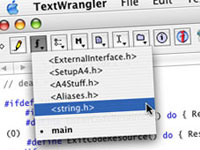
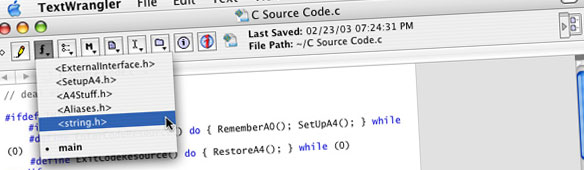
TextWrangler no longer exists as a separate product. Bare Bones Software folded it into BBEdit years ago, and TextWrangler itself doesn’t run at all on macOS Catalina or later. The good news: BBEdit in “free mode” (no license) is a capable text editor with syntax highlighting, which is part of what makes it a practical TextWrangler replacement. If you’re currently on TextWrangler, this is a drop-in replacement, not a downgrade, and it works as a native Mac app on current Macs.

MAMP (web development)

MAMP (web development)
10 Free Mac Apps for Web Developers in 2026 (Verified Still Working) 12

Still exactly what it says on the tin — a one-click local Apache/MySQL/PHP environment for testing sites before they go live. This one hasn’t needed replacing; it’s still a standard recommendation for local WordPress and PHP development on Mac.

Paparazzi!
Paparazzi
10 Free Mac Apps for Web Developers in 2026 (Verified Still Working) 13

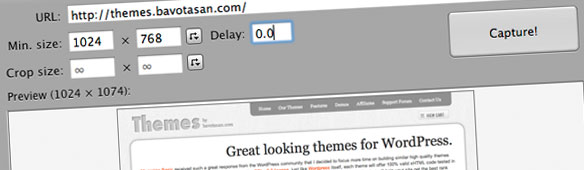
Still alive and still actively released — the developer shipped an update as recently as mid-2026. It remains a genuinely useful, no-frills way to grab full-page screenshots of a website for a portfolio or a client handoff. It is also handy when you need screen recording-adjacent visual handoff material, even though its main value is still static captures. For quick markups after capture, developers may pair it with a simple app that includes a built in editor for annotations.

YemuZip
YemuZip
10 Free Mac Apps for Web Developers in 2026 (Verified Still Working) 14

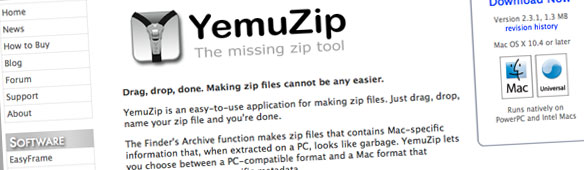
Still works, but it’s no longer accurate to call it free — after a long stretch with no updates, it moved to a paid ($4.99) Mac App Store listing with an ad-supported free tier. It’s not dead, but it’s worth flagging the pricing change rather than repeating “free” as a selling point. macOS’s built-in Archive Utility has also improved since 2009, so for many people a dedicated tool isn’t strictly necessary anymore.

VirtualBox
VirtualBox
10 Free Mac Apps for Web Developers in 2026 (Verified Still Working) 15

Still actively developed and still free. It’s worth noting for Apple Silicon Macs specifically: recent VirtualBox releases do support Apple Silicon, but performance and Windows-guest compatibility on ARM Macs is a rougher experience than it was running Intel Windows on an Intel Mac. Worth checking VirtualBox’s current release notes for your specific Mac chip before assuming parity with the old Intel-era setup.

For more modern local development environments on Mac, docker desktop is often the better fit because it’s built for managing containers and local development environments rather than full virtual machines, and it’s free for small businesses under 250 employees while also including Kubernetes support for orchestration.

Skype → Now Teams, Slack, or Zoom

Skype
10 Free Mac Apps for Web Developers in 2026 (Verified Still Working) 16

Skype is gone. Microsoft officially retired it on May 5, 2025, migrating remaining users to Microsoft Teams. If a site still recommends Skype as the default way to talk to clients, that’s now actively bad advice — point people to Microsoft Teams (free tier), Slack, or Zoom instead, depending on what the client already uses; Slack is especially common for team communication and integrates with over 2,600 apps for collaboration.

GIMP

GIMP
10 Free Mac Apps for Web Developers in 2026 (Verified Still Working) 17

Still the standard free, open source alternative to Photoshop, still actively developed, and still a completely valid recommendation for a Mac developer who doesn’t want a Creative Cloud subscription.

Cyberduck
Cyberduck
10 Free Mac Apps for Web Developers in 2026 (Verified Still Working) 18

Still actively maintained and still one of the best free FTP/SFTP/cloud storage browsers for Mac. No changes needed here.

Raycast is a useful companion utility for developers who want to launch apps faster than Spotlight.

It’s also one of the more useful productivity apps on Mac, with over 1,300 extensions for productivity.

For window management, Rectangle is a solid pick because it handles keyboard shortcut-based window snapping.

SvnX → Use Git Client Instead
SvnX
10 Free Mac Apps for Web Developers in 2026 (Verified Still Working) 19

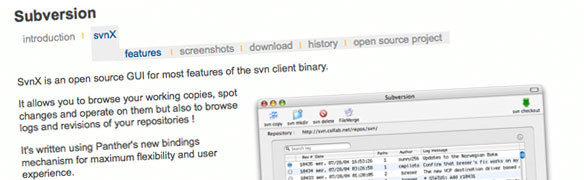
SvnX itself is archived with no ongoing development. But the bigger shift is upstream of the tool: Subversion’s dominance as the default version control system has been almost entirely replaced by Git over the past decade-plus, including in Apple’s own command-line tools. For a Mac developer today, the practical recommendation isn’t “a better SVN GUI” — it’s GitHub Desktop if you want a tool for local Git interactions on Mac, Tower as a visual git client, or Fork as a fast option designed for Mac users. If you prefer to stay in your editor, visual studio code also offers built-in git integration for version control. And for package management, Homebrew simplifies installing Git and other tools on Mac, with access to over 7,000 packages.

Sequel Pro → Now Sequel Ace
Sequel Pro
10 Free Mac Apps for Web Developers in 2026 (Verified Still Working) 20

Sequel Pro was abandoned by its original team back in 2020. The community forked it into Sequel Ace, which is actively maintained, ships a native Apple Silicon build, and can import your existing Sequel Pro connections directly. If you need a database manager with broader support than MySQL, DBeaver is a database management GUI for various databases. TablePlus is another option that supports 15+ database types and costs $79 per year. If you’re still running the original Sequel Pro, it’s worth the switch — the old build has no path forward once Apple retires Rosetta support for Intel-only apps.

Frequently Asked Questions

Is TextWrangler still safe to download and use in 2026?

No — it doesn’t run on macOS Catalina (10.15) or later at all, and it hasn’t been updated since Bare Bones folded it into BBEdit. Use BBEdit’s free mode instead; it has full feature parity plus more.

What happened to Skype?

Microsoft officially retired Skype on May 5, 2025, after 21 years, in favor of consolidating communications around Microsoft Teams. Existing Skype users were migrated to Teams Free automatically if they signed in before the cutoff.

Is Sequel Pro dead?

Yes — the original team stopped development in 2020. Sequel Ace is the actively maintained fork and current recommendation for a free MySQL GUI on Mac.

Do I still need a dedicated SVN GUI like SvnX?

Almost certainly not, unless you’re maintaining a legacy project that specifically requires Subversion. Git has become the default version control system for the large majority of current web development work, and Mac has strong free Git GUI options if you don’t want the command line. VS Code is the most popular code editor globally and already covers many workflows with built-in Git features and an integrated terminal.

What’s a good free tool for API work on Mac?

Postman is the easiest recommendation for api development on Mac because it offers a generous free tier with unlimited api calls for testing. It also auto-generates documentation, helps you design APIs without writing test code, and supports team collaboration on shared projects.

Which free terminal app is best on Mac?

iTerm2 is still the safest pick if you want a better terminal app on macOS. It’s a powerful terminal replacement for Mac with split panes and search, plus regular updates that add new features without making it hard to use. Ghostty is a fast terminal emulator built in Zig, and Warp Terminal is another option that uses gpu acceleration for a smooth experience.

What’s the easiest way to install developer tools on Mac?

Homebrew is the standard answer because its command line interface makes setup fast, and a simple brew install can pull in one package at a time from a catalog of over 7,000 tools. If you spend a lot of time in the shell, Oh My Zsh is also worth adding because it improves Zsh with plugins and themes.

Closing Thoughts

Half of this list needed an update, and that’s not unusual for a decade-plus-old “free tools” post — operating systems move on, companies retire products, and open source projects lose their maintainers. MAMP, VirtualBox, GIMP, Cyberduck, and Paparazzi! are still exactly the recommendations they always were. For the rest, BBEdit, Sequel Ace, Git-based tools, and Teams/Slack/Zoom are the honest current answers.

WordPress maintenance vs management is the single most expensive misunderstanding in the WordPress services market, and most agencies actively make it worse.

Quick answer: In the WordPress maintenance vs management comparison, maintenance is the technical upkeep that keeps a site running — updates, backups, security scanning, uptime monitoring. Management includes all of that and adds ownership of the site’s direction and performance. Maintenance keeps the site alive. Management is accountable for what it does.

Most providers reduce WordPress maintenance vs management to two tiers sitting side by side on a pricing page. Pick one.

That framing is wrong, and it is why so many businesses sign a contract expecting one thing and receive the other. Maintenance and management are not siblings. Management is the superset that contains maintenance. Every genuine management engagement includes the full maintenance task list. No maintenance plan includes management.

Get the WordPress maintenance vs management decision wrong and you end up with a site that is perfectly updated, perfectly backed up, perfectly secure — and going nowhere.


WordPress maintenance vs management at a glance

 WordPress MaintenanceWordPress Management
Core questionIs the site working?Is the site working for the business?
PostureReactive and scheduledProactive and strategic
Who decides what changesYou do. The provider executes.The provider recommends. You approve.
ScopeUpdates, backups, security scans, uptime monitoringEverything in maintenance, plus performance, content, SEO, conversion, roadmap
Monthly deliverableA completed-tasks reportA performance report with recommendations
Measured byUptime, patch currency, backup successTraffic, rankings, conversions, revenue
Accountable for outcomesNoYes
Typical US cost$50–$200/mo$250–$2,000+/mo
If you skip itThe site breaksThe site quietly stops competing

WordPress maintenance vs management: the 7 critical differences

Seven differences do the real work in WordPress maintenance vs management. Everything else is a variation on them.

1. Detection. Under maintenance, you notice problems first. Under management, your provider does.

2. Decision-making. Maintenance executes your instructions. Management forms its own recommendations.

3. Accountability. Maintenance is accountable for tasks completed. Management is accountable for business outcomes.

4. Scope boundaries. Maintenance has a fixed task list. Management has a roadmap that changes with your goals.

5. Reporting. Maintenance reports what was done. Management reports what happened and what to do next.

6. Judgement. Maintenance keeps your existing plugins updated. Management questions whether you should be running them at all.

7. Direction. Maintenance preserves the status quo. Management moves the site somewhere.


What WordPress maintenance actually covers

WordPress maintenance is the recurring technical work required to keep an installation secure, current and available. Whether you run the list in-house or buy WordPress maintenance services from an agency, that list barely changes month to month:

  • Core, plugin and theme updates, staged and tested before they touch production
  • Offsite backups with periodic restore tests — an untested backup is a guess
  • Security scanning and malware monitoring, plus firewall rules and login hardening
  • Uptime monitoring with alerting
  • Database optimisation — post revisions, expired transients, orphaned tables
  • Broken link and 404 monitoring
  • PHP compatibility checks ahead of host-forced version bumps
  • A monthly report confirming what was done

That is the whole category. It is genuinely valuable and genuinely finite.

The defining characteristic is that the provider is not deciding anything. If your plugin roster is wrong, maintenance keeps the wrong plugins updated. If your homepage does not convert, maintenance keeps a non-converting homepage online with excellent uptime.


What WordPress management adds on top

Management contains the full maintenance list, then adds responsibility for direction and performance. That is the line between buying a maintenance plan and buying website management services: one keeps the site current, the other is answerable for what it achieves.

You cannot manage a site you are not maintaining. You can absolutely maintain a site nobody is managing — and a great many businesses are doing exactly that.

Management adds performance ownership, content and publishing, SEO oversight, conversion work, roadmap planning, vendor coordination, and reporting that ties site metrics to business outcomes.


The one test that settles WordPress maintenance vs management

Ignore the feature list. Ask one question:

When something on your site should change, who notices first?

Under maintenance, you notice. You find the broken contact form when a customer complains, email your provider, and they fix it — billing you if it falls outside scope. Detection sits with you. That is not a failure; it is how maintenance is designed.

Under management, your provider notices, and comes to you with a diagnosis before you have seen the problem.

Detection order matters more than response time. If your provider’s first awareness of a problem is your email, a two-hour response SLA is irrelevant. The delay already happened, and it was measured in days.


Why “my host handles updates” is dangerously wrong

This is the costliest misunderstanding inside the WordPress maintenance vs management question, and the documentation is partly to blame.

Plugin and theme auto-updates are off by default in WordPress. The explicit statement lives on make.wordpress.org rather than user-facing docs. There is a setting called plugins_auto_update_enabled that defaults to true, which is easy to misread as auto-updates being on. It only controls whether the interface elements display.

More significantly: any plugin or theme not hosted in the WordPress.org directory receives no automatic updates at all. The update check is a single request matched by directory slug, so a commercial product produces no result. If you run a premium theme or paid plugins — and most business sites do — that entire portion of your attack surface is invisible to every automatic mechanism in the platform.

The scale is not small. Patchstack recorded 11,334 new WordPress vulnerabilities in 2025, a 42% year-on-year rise, with 91% in plugins. (Patchstack, State of WordPress Security in 2026)

Here is why that lands on the management side of the WordPress maintenance vs management line. Patching on schedule is a checklist task. Deciding which plugins are worth their attack surface, keeping a tracked manual process for every commercial product the auto-updater cannot see, and noticing when a vendor has abandoned a plugin — those are judgement calls. No checklist produces them.

One honest caveat. The widely repeated claim that plugin vulnerabilities cause most WordPress compromises is not currently sourced. The 91% figure describes the vulnerability catalogue, not breach causes. The most recent hacked-site telemetry, Sucuri’s 2023 report, found 13.97% of compromised sites had a vulnerable component present — presence, not cause. Meanwhile Wordfence blocked 55 billion password-hacking attempts against 48 billion vulnerability-targeting requests in 2024, and both vendors name stolen credentials as the rising intrusion source. (Wordfence, 2024 Annual WordPress Security Report)

Which is itself the argument. Maintenance patches. Management looks at where the evidence points and fixes your credential controls too.


WordPress maintenance vs management in five real scenarios

ScenarioMaintenance onlyFull management
Critical plugin vulnerability disclosedPatched next scheduled cycleIdentified, staged, tested, deployed — including commercial plugins no auto-updater reaches
Traffic spike overloads the serverSite slows; you hear it from visitorsLoad monitored, resources scaled before users notice
Rankings decline over three monthsYou find it in Analytics weeks laterFlagged in the monthly report with a fix
Contact forms stop capturing leadsYou find out when prospects stop callingConversion tracking catches it and escalates
Seasonal campaign needs a new featureYou request a quote; billed separatelyProposed proactively as part of the roadmap

That is WordPress maintenance vs management in practice: maintenance keeps the engine running, management drives the car somewhere.


Where hosting and support fit into WordPress maintenance vs management

Managed WordPress hosting covers the server: infrastructure uptime, server-side caching, platform security, sometimes automatic core updates. It does not cover anything inside your install. If a plugin update breaks your checkout, your host will tell you that is not their problem.

WordPress support services are reactive help on request. Something breaks, you open a ticket, someone fixes it. Support is measured in response time. Maintenance is measured in prevention.

The clean hierarchy:

  1. Hosting — where the site runs
  2. Maintenance — keeping what runs healthy
  3. Support — fixing what breaks
  4. Management — all of the above, plus deciding what should change and owning the result

WordPress maintenance vs management: which does your business need?

Your decision is not which to pick. It is how far up the hierarchy your site needs to go.

WordPress maintenance vs management: choose maintenance when…

  • The site is primarily informational, changing infrequently
  • It is not central to lead generation or revenue
  • Someone internal can handle edits and recognise breakage
  • You accept being first to notice problems, because the stakes are lower

Paying management rates here is a waste. Buy good maintenance and spend the difference elsewhere.

WordPress maintenance vs management: choose management when…

  • The site supports lead generation, ecommerce or donations
  • Downtime or slow performance has material financial impact
  • You cannot describe the site’s roadmap for the next year
  • Multiple integrations create dependencies nobody is watching
  • Nobody internally owns the site’s performance

This is the most expensive gap we see: a site receiving excellent maintenance, no downtime in two years, and not one ranking position gained. The provider did nothing wrong — nobody asked them to.

If you are losing leads because something broke and nobody noticed for days, you do not have a maintenance problem. You have a management gap.

Start with maintenance, upgrade later when…

You are early, budget is tight, and the site is not yet a primary channel. Set a trigger and revisit. The mistake is not starting with maintenance — it is staying there for four years while expecting management outcomes.


Five questions that settle WordPress maintenance vs management before you sign

  1. Who decides what changes on my site? “You tell us” means maintenance.
  2. How do you detect issues, and how fast? Management describes monitoring, alerting and SLAs.
  3. Do you test updates in staging first? Lower tiers push straight to production.
  4. What is in the monthly report? Completed tasks is maintenance. Metrics with recommendations is management.
  5. What is out of scope, and what does it cost? A provider who cannot answer quickly has not thought about it.

Red flags

  • A plan marketed as management, priced at maintenance rates, with no strategic work
  • No proactive monitoring beyond a basic uptime check
  • No tracked process for commercial plugins and themes
  • The provider has never contacted you first. You always initiate.

Audit which side of WordPress maintenance vs management you are paying for

  1. Review the last three issues. Did your provider flag them, or did you?
  2. Check six months of reports. Tasks, or metrics with recommendations?
  3. Count your commercial plugins and themes — those get nothing automatically.
  4. Map the site’s business role. Revenue or leads means maintenance alone is insufficient.
  5. Match spend to need. Do not overpay on a brochure site; do not underpay on a revenue site.

WordPress maintenance vs management FAQ

What is the difference between WordPress maintenance vs management?

Maintenance is scheduled technical upkeep — updates, backups, security scanning, uptime monitoring. Management includes every maintenance task and adds ownership of performance, content, SEO and business outcomes. Maintenance sits inside management rather than beside it, which is why every management plan includes maintenance but no maintenance plan includes management.

No. Managed hosting is a server product covering infrastructure, caching and platform security. Management is a service relationship covering everything inside your site, including strategy. You can have both, and most active business sites should.

Over the past six months, has your provider contacted you about a performance decline or a ranking drop before you noticed? Do reports contain recommendations, or only completed tasks? If the answer to both is no, you are receiving maintenance regardless of what the invoice says.

Yes, and many businesses should. As traffic and revenue dependence grow, the cost of nobody noticing problems first grows with them. Most providers offer stackable tiers that make the transition straightforward.

In the US market, WordPress maintenance plans typically run $50–$200 per month. Management generally starts around $250 and rises with scope, commonly reaching $1,000–$2,000 where the provider owns SEO, content and conversion work.

Because plugin and theme auto-updates are off by default in WordPress, and anything outside the WordPress.org directory receives no automatic updates at all. Most business sites run at least one commercial theme or paid plugin, so the platform’s automatic machinery cannot reach a meaningful part of the attack surface.

Yes, and for a simple site it is reasonable. Budget two to four hours a month. The failure mode is not incompetence — it is the third consecutive month where something more urgent came up.

With proper monitoring, critical issues should be detected within minutes and a six-business-hour response is a reasonable benchmark. But detection matters more than response. If your provider’s first awareness comes from your email, the delay already happened.

The site stays secure, current and online. It will not improve. Over two or three years, competitors actively managing their sites will out-rank and out-convert you, and your maintenance reports will show green the entire time.

WordPress maintenance vs management: the short version

The WordPress maintenance vs management question comes down to this: maintenance answers “is the site working?” Management answers “is the site working for the business?” One is contained inside the other, and confusing them is the most common reason businesses feel let down by a provider who is technically delivering exactly what was purchased.

Work out which question you need answered, then buy accordingly.

Search

Popular Posts

Small Biz Website Tips Newsletter

Stay up to date with the latest marketing, sales, and service tips and news.

Small Biz Website Tips Newsletter

Stay up to date with the latest marketing, sales, and service tips and news.